

How Much Fabric Do You Need for Wedding Draping & Backdrops? A Practical Yardage Guide
Buying fabric for a wedding backdrop or event draping can be confusing. You may know that you want chiffon, voile, interlock, velvet, or another fabric, but the bigger question is:
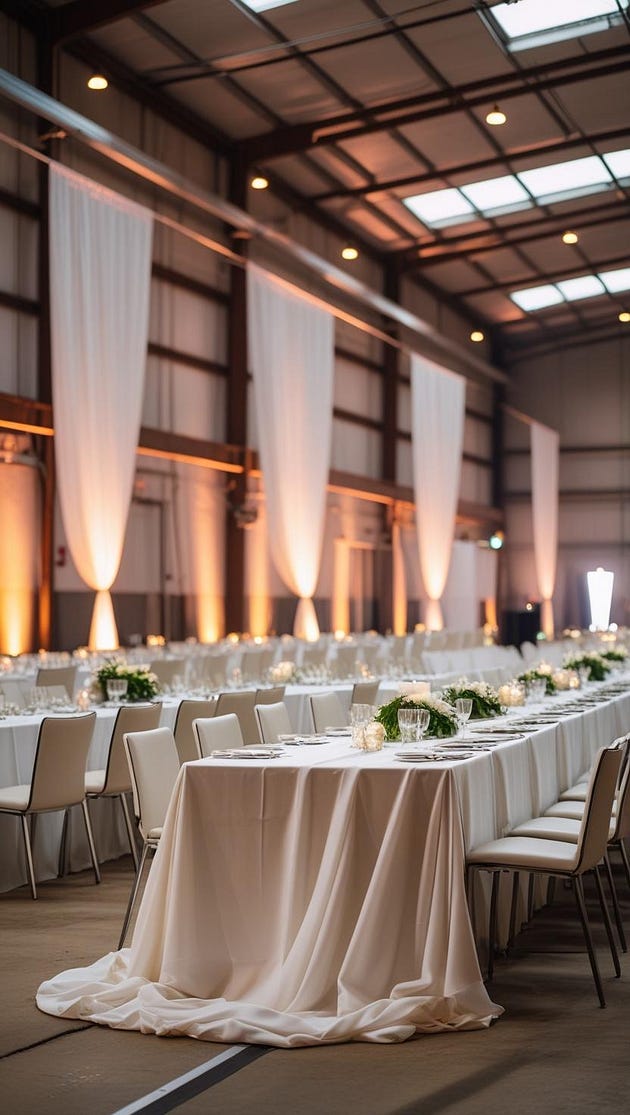
How much fabric do I actually need?
The answer depends on the size of the area you are covering, the width of the fabric, how full you want the draping to look, and whether the fabric will hang straight, gather into folds, swag across an arch, or drape across a ceiling.
Ordering too little can leave your backdrop looking flat or incomplete. Ordering far too much increases the cost of the project unnecessarily.
This guide explains how to estimate fabric for wedding backdrops, arches, pipe-and-drape installations, sweetheart tables, stages, and ceiling draping—and how to choose the right fabric for each type of setup.
Start With the Finished Size of Your Backdrop
Before ordering fabric, measure the area you want to decorate.
For a backdrop, you need two basic measurements:
- Width: How wide is the backdrop?
- Height: How tall is it?
For example, if your backdrop stand is 10 feet wide and 10 feet high, covering it completely flat requires approximately 10 feet of fabric across the width.
But most wedding backdrops are not installed completely flat.

Decorators usually create folds, gathers, overlapping sections, or multiple colors. That means the amount of fabric needed across the backdrop can be considerably greater than the actual width of the stand.
Why Fullness Changes How Much Fabric You Need
Fullness is the extra fabric used to create folds instead of stretching the material flat across the backdrop.
A 10-foot-wide backdrop covered with exactly 10 feet of fabric will have very little fullness.
Using additional fabric creates deeper folds and a more finished appearance.
The amount you need depends on the look you are trying to create. A simple backdrop may use relatively little extra fabric, while a dramatic wedding or stage backdrop may require considerably more.
This is why there is no single yardage number that works for every 10-foot or 20-foot backdrop.
Don’t Forget the Height
Height is just as important as width.
If your backdrop is 10 feet high, the fabric needs to reach from the top support to the floor.
You may also want additional length if you want the fabric to gently pool on the floor.

Before ordering, consider:
- Height of the backdrop stand
- How the fabric will be attached
- Whether it will hang straight or swag
- Whether you want fabric touching or pooling on the floor
For taller installations, stages, and venues, always measure before purchasing.
Fabric Width Matters More Than Many Buyers Realize
Two fabrics can have the same length but cover very different areas because their widths are different.
For example, many event fabrics are approximately 58–60 inches wide, while some voile fabrics are available in much wider widths.
A wider fabric can cover more area with fewer separate pieces and may reduce the number of seams or overlapping sections needed for a large backdrop.
Always check both the fabric width and the length before deciding how much to order.
Best Fabrics for Wedding Backdrops and Event Draping
Different fabrics create completely different looks. Choosing the right material can be just as important as calculating the quantity.

Chiffon
Chiffon is one of the most popular choices for wedding and event draping because it is lightweight, flowing, and slightly sheer.
It works especially well for:
- Wedding backdrops
- Ceremony arches
- Sweetheart tables
- Ceiling draping
- Swags
- Layered backdrops
- Romantic event décor
Chiffon is a good choice when you want soft movement rather than a heavy or structured appearance.

Voile
Voile is lightweight and sheer and is especially useful for large wedding and event installations.
Wide-width voile can be particularly helpful when covering large areas because fewer separate pieces may be required.
Voile works well for:
- Large backdrops
- Pipe-and-drape installations
- Wedding arches
- Ceiling draping
- Tent decorating
- Stage backgrounds
- Large venue installations
For decorators covering substantial areas, fabric width should be considered along with price per yard.

Interlock
Interlock offers a different appearance from chiffon and voile. It is soft, stretchy, and more opaque, making it useful when you want stronger coverage.
Interlock is commonly used for:
- Wedding backdrops
- Photo areas
- Stage backgrounds
- Sweetheart tables
- Pipe-and-drape setups
- Event installations
It is a practical option when you don’t want the background behind the fabric to show as much as it would through sheer chiffon or voile.

Panne Velvet
Panne velvet creates a richer, more dramatic appearance.
Its texture reflects light differently from sheer fabrics and can work especially well for:
- Formal weddings
- Stage backdrops
- Photo areas
- Holiday events
- Fall and winter weddings
- Luxury-themed events
- Dramatic color combinations
Velvet can also be layered with chiffon or voile to combine a rich background with softer flowing fabric.

Satin
Satin provides a smooth surface with noticeable shine.
It can be used for:
- Wedding décor
- Sweetheart-table backgrounds
- Table décor
- Reception decorations
- Formal event displays
- Decorative accent sections
Because satin reflects light strongly, consider the venue lighting and photography when selecting a color.

Organza
Organza is sheer but has more structure than chiffon.
It works well when you want:
- Decorative layers
- Shimmer
- Overlays
- Bows
- Swags
- Accent sections
Organza can also be combined with chiffon or other fabrics to add texture and dimension.

Sequin Fabric
Sequin fabric is usually better as an accent or statement material than as the only fabric covering a very large installation.
It is especially effective for:
- Photo backdrops
- Sweetheart-table backgrounds
- Head tables
- Glamorous weddings
- Stage accents
- Special-event displays
Combining sequin fabric with chiffon, voile, interlock, or velvet can create a more dimensional backdrop.
How Much Fabric Do You Need for a 10-Foot Backdrop?
Start with the dimensions of the stand.
For a 10-foot-wide backdrop, remember that 10 feet of fabric across the width only provides approximately flat coverage.
If you want visible folds and fullness, you will need additional fabric across the width.
You also need enough length to cover the full height of the backdrop.
For example, a 10-foot-high backdrop requires fabric long enough to travel from the top of the stand to the floor, plus any additional length desired for pooling.
The final quantity therefore depends on:
- Backdrop width
- Backdrop height
- Fabric width
- Desired fullness
- Number of colors
- Number of layers
- Installation style
One Large Piece or Several Smaller Pieces?
You do not necessarily need one enormous piece of fabric.
Many professional-looking backdrops are created using several individual pieces positioned next to each other.
Multiple pieces allow you to:
- Alternate colors
- Create deeper folds
- Replace individual sections
- Mix different fabrics
- Build layered designs
- Adjust the installation for different venues
For example, a decorator might combine ivory and champagne chiffon or use velvet in the center with chiffon on each side.
This approach also makes the fabric easier to reuse for future events.
Pre-Cut Fabric vs. Fabric by the Yard
Another important buying decision is whether to order fabric by the yard or purchase pre-cut lengths.
Fabric by the Yard
Fabric by the yard is useful when you need:
- A specific custom length
- Smaller projects
- DIY decorations
- Table décor
- Crafts
- Custom backdrop designs
Pre-Cut Fabric Lengths
Pre-cut fabric can make planning easier for event decorators who regularly build backdrops.
Instead of measuring and cutting a large roll for every event, you can choose a predetermined length that matches your setup.
Pre-cut fabric is especially convenient for repeat installations, rental companies, wedding decorators, and venues.
Important: Pre-cut fabric is cut fabric only unless the product specifically states otherwise. It should not automatically be considered a sewn or finished curtain. Always check the individual product description before ordering.
When Does Buying a Full Roll Make More Sense?
For professional decorators, venues, rental companies, florists, and businesses that regularly use the same fabrics, purchasing a larger continuous piece or wholesale roll can be more practical than repeatedly ordering small quantities.
Bulk fabric can be useful when you:
- Decorate multiple events
- Need large continuous lengths
- Regularly use the same colors
- Maintain event décor inventory
- Operate a rental company
- Create large venue installations
- Need fabric available for last-minute jobs
Before choosing between by-the-yard fabric, pre-cut lengths, or wholesale quantities, consider how frequently you expect to reuse the material.
How Much Fabric Do You Need for a Wedding Arch?
Wedding arches vary considerably in size and design.
First measure the path the fabric will actually travel.
Fabric wrapped around an arch or draped in multiple swags travels farther than the simple height and width measurements of the structure.
For an arch, consider:
- Height
- Width
- Number of sides being covered
- Number of swags
- Amount of fabric hanging down
- Desired fullness
- Whether multiple colors will be layered
Measure the complete draping path rather than estimating from the front dimensions alone.
How Much Fabric Do You Need for Ceiling Draping?
Ceiling draping requires particularly careful measurement because fabric often travels farther than the straight-line distance across the room.
Measure from the attachment point to the center or opposite attachment point following the approximate curve you want the fabric to make.
Then account for additional fabric needed to create the desired swag.
For large venues, multiply the length of one run by the number of fabric runs planned.
This can quickly become a large quantity of fabric, which is one reason wide-width voile and wholesale fabric quantities can be useful for professional installations.
Order a Sample Before a Large Purchase
Color can look different on a computer or phone screen than it does in person.
Lighting also changes how chiffon, satin, velvet, voile, and other fabrics appear.
Before ordering a large quantity for an important event, consider checking a fabric sample first.
A sample allows you to evaluate:
- Actual color
- Texture
- Sheerness
- Stretch
- Shine
- Weight
- How the fabric looks under your venue lighting
This is particularly valuable when coordinating fabric with bridesmaid colors, flowers, table linens, or other décor.
Best Fabrics for Event Draping
• Voile Sheer Fabric — soft, airy, romantic ceiling and arch draping
• Chiffon Fabric — lightweight & elegant for backdrops and sweetheart tables
• Poly Poplin Fabric — wrinkle-resistant for tablecloths and wall draping
• Velvet Fabric — rich, luxurious look for winter and upscale weddings
• Stretch Panne Velvet / Velour — flexible velvet ideal for stages & photo setups
• Satin Fabric — shiny & glamorous for receptions and luxury tables
• Organza Fabric — crisp sheer elegance for overlays and layered draping
• Sequin Fabric — sparkling, glamorous choice for photo walls & head tables
• Interlock Fabric — soft stretch for smooth, seamless event draping
• Checkered Plaid Fabric — rustic and seasonal décor accents & table designs
Common Mistakes When Ordering Backdrop Fabric
One of the biggest mistakes is ordering based only on the width of the backdrop.
Remember to consider the height, fabric width, fullness, layers, swags, and any fabric that will pool on the floor.
Another common mistake is assuming every fabric behaves the same way.
Chiffon, voile, interlock, satin, organza, and velvet have different weights, levels of transparency, stretch, and draping characteristics.
The best fabric is not simply the least expensive option. It is the fabric that creates the appearance you want while working properly with your installation.
Choosing the Right Option for Your Event
For a soft, romantic backdrop, consider chiffon.
For large sheer installations or wide coverage, consider voile.
For a smooth, more opaque backdrop, consider interlock.
For a rich and dramatic appearance, consider panne velvet.
For shine and formal décor, consider satin.
For crisp sheer layers and decorative accents, consider organza.
For glamorous photo areas and statement sections, consider sequin fabric.
The right choice depends on the event, venue, lighting, backdrop dimensions, budget, and whether the fabric will be reused.
Final Thoughts
The best way to calculate fabric for wedding draping is to start with the actual dimensions of your installation and then think about how the fabric will be used.
Don’t calculate only the square footage of the area.
Consider fabric width, backdrop height, fullness, layers, swags, floor pooling, and the type of fabric before placing your order.
New Star Fabric supplies fabric for wedding decorators, event professionals, venues, rental companies, businesses, and DIY customers. Options include fabric by the yard, pre-cut lengths, and larger wholesale quantities for many popular event fabrics.
Planning these details before purchasing can help you order more accurately, reduce waste, and create a backdrop that looks intentional and professional.
-
Shop Fabric Collections
Helpful Fabric Guides
- How to Choose the Right Fabric for Every Type of Event
- Chiffon vs. Voile for Wedding Backdrops
- How to Create a Luxury Wedding Backdrop
- How Many Yards of Fabric Do You Need?
- Best Fabric for Ceiling Draping
- How to Decorate a Wedding Arch
- Best Fabric for Wedding Backdrops
- How to Mix Fabric Textures for Event Décor
- Wedding Tablecloth Fabric Guide
Shop New Star Fabric
Find fabric by the yard, wholesale rolls, event fabrics, samples, and decorating materials for weddings, churches, banquet halls, schools, hotels, rental companies, and professional event decorators.
Watch Fabric University
Watch our Fabric University lessons for practical guidance on fabric selection, width, yardage, backdrops, ceiling draping, and professional event décor.